


The ink is barely dry on Goldman Sachs’ landmark investment in The Private Office, but founder Stuart Phillips insists the deal isn’t an exit - it’s fuel for the firm’s next phase of growth.
He tells Sheryl Moore why he chose Wall Street over private equity and how control was never up for negotiation…

It takes something unusual for Goldman Sachs to write a cheque into a UK financial planning firm.
The Wall Street giant has spent decades backing global businesses with ambitious growth plans, but its decision to take a significant minority stake in The Private Office is as much a vote of confidence in a business model as it is in a balance sheet.
For founder and CEO Stuart Phillips, the deal is not an exit. It is fuel.
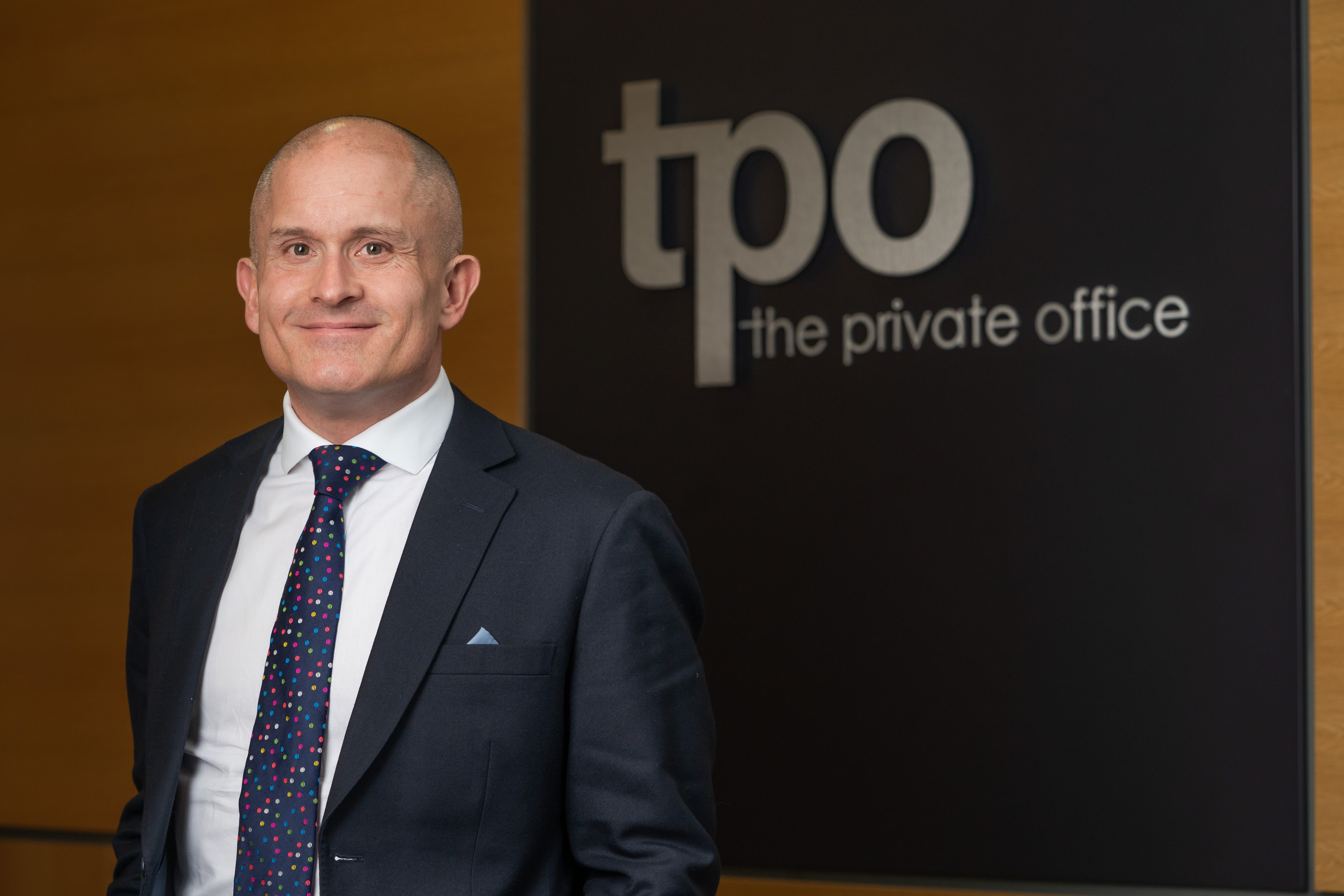
Following recent FCA approval, Goldman Sachs Alternatives has acquired around a 40% stake in the fast-growing wealth manager, injecting fresh capital to accelerate expansion while leaving control firmly with management and employees.
“I’ve got the fighting power of Goldman Sachs, but I’ve managed to retain control,” Stuart says.
Control was never negotiable
That balance was non-negotiable. At a time when much of the UK’s advice sector is being rolled into private equity-backed consolidators with short investment horizons, The Private Office is taking a different path. Its strategy is to continue growing organically, make selective acquisitions, invest heavily in graduates, technology and digital marketing, and expand what has become one of the UK’s fastest-growing independent financial planning businesses.
For Stuart, Goldman Sachs is not the destination. It is the partner for the next stage of the journey.
The deal came together quickly. After testing investor appetite several years ago and deciding the timing was not right, The Private Office returned to the market last autumn with a clear objective: bring in a minority partner, provide liquidity for shareholders and secure the capital needed to accelerate long-term growth without giving up independence.
Bids arrived on Christmas Eve. By 28 January, Goldman Sachs Alternatives had signed.
“It was quite a quick process,” Stuart says. Finding the right investor mattered more than achieving the highest valuation.
“Goldman Sachs Alternatives is not its private equity division, it’s their hybrid capital alternatives fund,” he explains. “They’re not like a private equity firm – they don’t need a return in three or five years; they can invest for longer. They have a slightly lower return requirement, so they take less risk.”
That investment philosophy mirrors Stuart’s own. The Private Office has never been built for a quick flip. Every major decision has reflected a long-term vision of what a modern financial planning business should look like.
Inside the ownership structure
Its ownership structure reflects that. Before the Goldman transaction, entrepreneur Mike Edge – founder of Chase De Vere Investments -owned just over 25% of the business personally, while another 25% sat with his environmental charity, Restore Our Planet. The remaining 49% belonged to Stuart and employees.
The latest transaction allowed Edge to realise his investment while preserving the charity’s stake.
Today, Goldman owns around 40% of the equity. Restore Our Planet retains 25%, while the balance remains in employee hands.
When the transaction completed, around 165 members of staff shared in the proceeds. Some received a few thousand pounds; others collected seven-figure sums.
Built organically, not through consolidation
The UK financial advice market has become increasingly dominated by consolidators, with private equity-backed firms acquiring regional businesses to build national scale. The Private Office has deliberately resisted that model.
Instead, it has relied on organic growth. “Initially we were looking after mainly high net worth clients, so sort of assets in excess of £700,000 at the time,” Stuart says. “We got almost all of our clients through professional connections and client referrals across Yorkshire, so we did quite a lot of work in Leeds, a bit of work in Sheffield, Ilkley, and across to Hull. We built the business like that pretty much organically.”
That approach has transformed what began as a Yorkshire boutique into a national business with offices in Leeds, London and Bath, employing around 180 people, including approximately 55 advisers.
Turnover has grown from just under £2m in its first year to almost £34m last year. This year Stuart expects revenues to exceed £36mn, generating profits of between £10m and £11m.
Rather than extracting those profits, the business reinvests heavily. The Goldman capital simply increases its ability to do so. “Our plan is organic growth first, with a few bolt-on acquisitions.”
This year around 60% of growth will come organically and 40% through acquisitions. Over time, Stuart expects that balance to move back towards 80% organic growth.
“It doesn’t need to be the primary goal within my thesis with GS that I have to buy anything,” he says. “It’s only if I think it’s accretive.”
A selective approach to acquisitions
That strategy is already taking shape. In April, The Private Office completed its first acquisition in seven years with the purchase of HEB Wealth, adding around £100m in assets under management and taking the firm’s total assets under management beyond £3.1bn.
For Stuart, the deal is exactly the type of acquisition the business wants to pursue—targeted, complementary and designed to strengthen the firm’s existing platform rather than simply add scale. That means buying only businesses that fit culturally. “We’re looking at large, small and medium acquisitions,” he says. “The main part is just being culturally aligned to the type of business that we are – making sure the type of clients and the services they provide align to the way we do things. If they’re a long way away, we’ll damage both businesses.”
Growing its own advisers
If acquisitions are selective, recruitment is relentless. Rather than relying on experienced advisers from elsewhere in the industry, The Private Office has built its own academy, recruiting graduates and developing them into chartered financial planners.
“Seventy-five percent of our advisers we’ve grown through our academy,” Stuart says. “We’ve run seven or eight academies. Mainly university grads – we’ve got a grad intake this year that will bring in 10 graduates, five in Leeds, five in London.”
It is not a cheap strategy. Graduates require years of training before becoming productive advisers, but Stuart believes it gives the firm a significant competitive advantage.
“It doesn’t look and smell like most financial planning businesses in the UK,” he says. The average adviser is just 33 years old and around 40% are women.
He dismisses criticism often levelled at younger workers. “One of the most fun things in our business is I sit in lots of forums where people whinge about lazy young people coming through. That’s not our experience at all. They’re hugely motivated, very driven, very professional.”
He also believes the profession itself has fundamentally changed. “If I think of the quality of the advisory people I knew, we’re on a different planet today. A lot of what badgered or hurt our industry – the mis selling, the way things were sold – came from recruiting from a pool of people that probably didn’t have the right moral standing and charging structures that were a bit jaundiced. That’s what’s changing.”
The marketing engine behind the deal
Strong financial performance helped secure the Goldman investment. But Stuart believes one capability stood above everything else: marketing.
Eight years ago, The Private Office made the unusual decision to build its digital acquisition capability in-house. Today, that operation generates around 1,200 enquiries every month.
“That was one of the main draws for the Goldman Sachs investment – the mechanism and the ability, and the way in which we do that,” Stuart says. “No one else is doing it at the level or the scale or speed in terms of our organic growth.”
Planning first, products second
The firm’s philosophy has remained unchanged. The Private Office is chartered, independent and whole-of-market. Advice starts with financial planning rather than product sales.
“We start with a plan. We don’t get paid to sell you something; we get paid to give you a plan, and then what you choose to do with it, we can help you achieve that, or you can go and do it yourself.”
Clients typically have investable assets of more than £650,000, although the business increasingly advises younger professionals building wealth ahead of future exits.
In London particularly, many simply want certainty. “They’re short of time, earning well, likely to have some form of capital event in the future, but also highly stressed and want to know what level of savings they need to get to in their own life to be able to tell their boss to sod off and leave work.”
For wealthier families, The Private Office increasingly acts as a family office, coordinating investment management alongside tax, legal and succession planning.
“Whilst the numbers become larger as you get bigger, so does the degree of complexity in terms of tax reporting and structures that are available to you. Often a big chunk would be gifting money. It’s not just about being more expensive – it’s about having the experience and the connections to do it properly.”
From financial crisis start-up to Goldman-backed business
The irony is that The Private Office was born in the wreckage of the financial crisis. Back in 2008, Stuart and a handful of colleagues left secure careers because, as he puts it, “the culture changed overnight, and it wasn’t the right place for us.”
There were just six advisers and fewer than 20 people. Looking back, he believes the timing made the business stronger.
“With hindsight, it’s not a bad time to start. It makes you have the core fundamentals of a business and make sure you do that appropriately.”
Seventeen years later, those fundamentals have attracted one of the world’s biggest financial institutions. The board now includes two Goldman Sachs representatives alongside independent chairman Mark Lewis, the former chief executive of MoneySuperMarket and former CEO of eBay Europe.
Why AI won’t replace the adviser
Yet Stuart still controls the business. He still intends to prioritise organic growth over acquisitions, and he believes technology will only increase the value of quality financial advice.
“We’ve had the internet for a long time, we’ve had search engines, we now have AI,” he says. “The ability for people to find an answer to a question has become much easier. The ability for people to compare how they go about buying something has changed completely.”
He compares it to buying a car. “You imagine how you buy a car. When we first started, you turned up at a showroom knowing probably what kind of brand you wanted, and a salesperson would help you choose the car. Whereas now you’ve probably been online, used the configurator, you pretty much know exactly. You turn up to really work out a finance deal.”
Financial advice, he argues, is following the same path. Clients arrive better informed than ever before. The adviser’s role is no longer to sell a product, but to build a plan.
For Goldman Sachs, that proposition was compelling enough to invest. For Stuart, it is confirmation that patient growth, employee ownership and a refusal to follow the industry’s consolidation playbook can still attract one of the world’s most recognisable investment banks.
The next phase of The Private Office will not be defined by the size of Goldman Sachs’ cheque. It will be defined by what Stuart and his team build with it.
::
Thank you for subscribing to Rainmakers.
We believe in good journalism that is worthy of your support. Please share this edition of Rainmakers so we can grow the message further and wider.
The insights and commentary we share with you are rooted in the trust we have built in the business community.
We’re also on LinkedIn - please join our Rainmakers community group for updates and offers and opportunities to comment.
If you have something you think we should look at, then either reply to this newsletter or email michael.taylor@thebusinessdesk.com.
Rainmakers is a reader-supported publication. To receive new posts and support our work, consider becoming a free or paid subscriber.