


Hello Rainmakers,
Fans of Sunday evening TV will know about the historic ups and downs of the Cornish tin mining industry from period dramas such as Poldark.
But once seen as little more than part of the far South West’s tourist offering – on a par with pasties and clotted cream – the sector has been reborn as a key element of the UK’s industrial growth strategy, helping not only the drive to net-zero transition but securing supplies of critical minerals.
That, in turn, has opened up new investment opportunities as global demand soars for lithium and tungsten as well as tin.
Rainmakers subscribers get two unique pieces a week, but also full access to our back catalogue of investigations, scoops, and insights, including updates from The Secret Investor, but also probes into hot and surprising sectors. Like this one.
Critical minerals are the vital – but often unseen - building blocks of modern life.
From electric vehicles batteries and smartphones components to the magnets that help turn wind turbines, tungsten, lithium and tin power much of our world.
Not surprisingly, global demand for these is soaring. And limited supplies are driving up prices – in the case of tin by more than 70% is less than a year and tungsten prices by an eye-watering 200%.
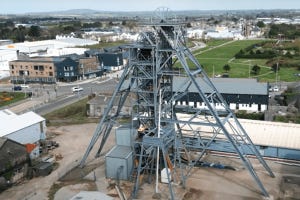
The fact that China dominates the global critical minerals supply chain - controlling more than 60% of rare earth mining and 94% of magnet manufacturing – has forced other nations to look at their own supplies. In the UK that has meant the spotlight falling on Cornwall and Devon.

These peninsula counties, with economies much dependent on tourism, are experiencing a new wave of investment in what had been considered an almost completely abandoned industry.
Last November the Government launched its Critical Minerals Strategy, calling it “a pivotal moment for the domestic mining industry” with targets to produce 10% of our mineral needs domestically and 20% through recycling by 2035.
It also included a pledge of up to £50m funding available for UK businesses to boost critical minerals projects including domestic production and processing.
Meanwhile, the National Wealth Fund (NWF) has already become a key player in the sector through loans, guarantees and equity investments, including putting more than £90m into Cornwall’s two leading projects.
Cornish Metals, which aims to unlock the potential of the historic South Crofty mine, abandoned since 1998, received a £26.8m, while Cornish Lithium has been awarded £31m.
