


Hello Rainmakers,
From pioneering online prescriptions with Pharmacy2U to building Leeds-based CloudRx, Daniel Lee has spent more than two decades reshaping how patients access medicines.
He tells Sheryl Moore how the £36m sale of CloudRx clears the way for his next big disruption: turning community pharmacies into clinical hubs powered by technology, automation, and ambition.
Rainmakers subscribers get two unique pieces a week, but also full access to our back catalogue of investigations, scoops, and insights, including updates from The Secret Investor, but also probes into hot and surprising sectors. Like this one.

Daniel Lee doesn’t just know how to make an exit - he knows when. He walked away from his first venture, Pharmacy2U after selling a big stake to G-Square Capital for £40m in 2018. That was a win, but for Lee, it’s never about the money. It’s about the moment, the pivot, the inflection point. With CloudRx, he’s doing it all over again-- rewriting the rules of pharmacy, igniting the UK’s e-pharmacy revolution, and proving that finishing one project isn’t slowing down - it’s launching the next disruption.
Long before digital health became a buzzword, Lee was challenging how medicines could be delivered in the UK. His Leeds-based venture Pharmacy2U helped pioneer the online prescription model at the turn of the millennium, forcing regulators and the sector to rethink what pharmacy could look like in the internet age.
More than two decades later, the £36m sale of CloudRx marks the latest chapter in that story - and clears the path for Lee’s next attempt to reshape the future of community pharmacy.
It was in 1999 that Lee launched Pharmacy2U in Leeds, widely recognised as the UK’s first large-scale online pharmacy. At the time, the idea of ordering prescriptions online and receiving them by post seemed at best radical.
“At the time people said it was impossible,” he recalls. “You simply couldn’t send prescriptions through the post.”
Regulation had been written long before the internet existed, and the idea that medicines could be dispensed remotely, without patients standing at a pharmacy counter, seemed incompatible with existing rules. Rather than abandon the concept, Lee took the challenge directly to regulators. Working with government departments and pharmacy organisations, he argued that technology would inevitably transform how medicines were supplied and that legislation needed to evolve alongside it. Those discussions led to regulatory changes allowing distance-selling pharmacies to operate. Pharmacy2U launched publicly in 2000.
From its Leeds base, the company grew rapidly, particularly as the NHS rolled out the electronic prescription service. Patients could order their medication online and have it delivered to their homes - a model now routine across the sector. At its peak, Pharmacy2U processed more than a million prescriptions a month and helped establish an entirely new category of pharmacy.
“It fundamentally changed how people access medicines,” Lee says. “And it all came from being willing to challenge the rules.”
Fast-forward more than two decades, and that same drive underpins his latest ventures, including CloudRx, the Leeds-based digital pharmacy being sold as part of a £41.7m buy-and-build strategy led by AIM-listed Vulcan Two Group. CloudRx operates a digital prescribing platform alongside a licensed pharmacy capable of dispensing private prescriptions nationwide, serving high-demand areas such as hormone therapy and weight-loss medication while integrating digital platforms with clinical systems to improve patient access and outcomes.

“Timing is everything with regards to value, but also the market opportunity,” Lee says.
The sale was far from sudden.
“It was a year-long process. These things don’t happen quickly.”

It arrived at a moment when the private healthcare market was accelerating rapidly. Post-COVID demand for treatment outside the NHS has surged, particularly in areas such as menopause, weight-loss, ADHD and mental health services for younger patients. As CloudRx expanded into this fast-growing market, attention quickly followed.
“When you have a very high-growth, highly profitable business you quickly come onto people’s radar,” Lee says. “You start getting a lot of incoming calls.”
At that point, the strategic question becomes unavoidable: keep scaling independently or bring in investors with the infrastructure and capital to take the company further.
“You get to a point where you know how far you’ve taken it,” he explains. “Sometimes it needs to be professionalised - middle management, systems, processes. It just felt right with CloudRx.”
Preparation, he adds, is everything when it comes to selling a business. Long before advisers enter the picture, founders need to ensure the company is in the strongest possible position.
“You’ve got to be in a strong position when you sell,” he says. “It takes six months just to get a business ready. Then it’s marketed properly and you go through a full process.”
The outcome was a successful exit and the opportunity to focus on what comes next. Because CloudRx, in many ways, was never the ultimate destination.
Lee’s latest venture, HubRx, is built around an idea that sounds deceptively simple but carries potentially profound implications for the future of pharmacy: remove the industrial work of dispensing medicines from community pharmacies so pharmacists can concentrate on clinical care. At first glance, hub RX looks like an infrastructure play.
The business is building a large automated dispensing hub in Leeds designed to process huge volumes of prescriptions for independent pharmacies. But the ambition behind it is broader - nothing less than a rethink of how pharmacists fit into the UK’s strained primary care system.
“HubRx is there to support independent pharmacies,” Lee says. “For years pharmacists have been performing standard dispensing tasks, but they’ve been massively underutilised. They have incredible skills that could help support the local health economy.”
The need for change is becoming increasingly urgent. Across the country, pharmacies face growing pressure as prescription volumes rise while funding remains tight.
“Pharmacies are really struggling,” he says bluntly. “We’re paid by the government and there simply isn’t the money. Minimum wage is rising, utilities are rising, inflation is rising. The economics of dispensing are broken.”
Rather than simply cutting costs or consolidating operations, he began exploring whether the entire model could be redesigned. When HubRx was first conceived five years ago, the idea was ahead of its time - and technically illegal. At that stage, community pharmacies were not permitted to outsource dispensing to a separate organisation. Changing that required years of lobbying, consultation and negotiation with regulators and government.
“We had to get legislation changed,” he says. “It was delayed by COVID and changes in government, but eventually the rules were amended. Since last September pharmacies can finally outsource their dispensing.”
To prove the concept - and understand the operational realities from the inside - he and business partner Sean Riddell began buying pharmacies themselves. The group now owns 31 branches across Yorkshire, making it one of the region’s largest independent pharmacy operators. Those locations have become testbeds for the HubRx model.
“We’ve transformed them,” he says. “They were significantly loss-making because dispensing on its own often doesn’t pay. By removing that work and replacing it with higher-value consultation services, the economics change completely.”
Instead of focusing almost entirely on filling prescriptions, pharmacists can now deliver services including weight-loss consultations, blood pressure checks, medicines advice and participation in the government’s Pharmacy First programme.
“It’s a massive shift,” he says. “Pharmacists are suddenly thinking of themselves as clinicians rather than dispensers.”
The transformation is about more than economics. It is also about improving access to healthcare at a time when GP surgeries are under intense pressure. Patients frequently struggle to obtain appointments for minor but urgent conditions. Pharmacists, he argues, could fill that gap - if they had the capacity.
“Imagine it’s Monday morning and you’ve got a chest infection,” he says. “You can’t get a GP appointment for two weeks. But you can walk into a pharmacy and speak to someone straight away.”
The idea of pharmacists acting as frontline clinicians is already gaining momentum. Government programmes increasingly allow pharmacists to diagnose and treat certain conditions. In Scotland, around 30 conditions fall within this scope. In England, the list is currently smaller - around seven - but it continues to expand.
He says: “Pharmacists are often too busy dispensing to do these services, they simply don’t have the time.”
That is where HubRx he believes, becomes crucial. By centralising the repetitive assembly of prescriptions in automated facilities using robotics and digital systems, pharmacies can release pharmacists to focus on patient care. The shift, if it succeeds at scale, could fundamentally redefine the profession.
Lee, a pharmacist who joined the family pharmacy business after university but soon realised he wanted to be an entrepreneur, has repeatedly worked with private equity investors to scale businesses. That includes Pharmacy2U, which he sold several times before its eventual exit in 2018. His experience has taught him that partnering with private equity requires a certain mindset.
“It’s not for everyone,” he says. “Private equity is very financial. It’s about returns. They don’t care as much about the business the way founders do.”
Yet the advantages can be significant.
“You might take a smaller piece of the pie,” he says, “but you gain the ability to scale much faster.”
Perhaps the most difficult challenge for founders is knowing when to step aside.
“You’ve got to recognise when your role as founder is finished,” he says. “Some people struggle with that, and it ends badly.”
With CloudRx now set for new ownership - the deal is subject to regulatory approval – Lee’s attention has shifted fully to the HubRx network and the growing chain of pharmacies supporting it. The plan is now focused on two priorities: expanding the automated dispensing hub and continuing to transform community pharmacies into clinical healthcare centres.
A key part of that strategy is upskilling pharmacists. Already, 25 pharmacists within the group have retrained as independent prescribers through a nine-month university programme funded by the business. More are expected to follow.
“That’s the obsession at the moment,” he says. “Transforming those pharmacies.”
If successful, the implications could extend far beyond Yorkshire. For years, community pharmacy has been described as one of the NHS’s most underused resources - a highly trained workforce largely confined to dispensing medicines. HubRx is designed to unlock that capacity. And for the disruptor behind it, the journey is far from over.
“There are always new ideas,” he says. “But right now the focus is building this properly.”
Because, as the sale of CloudRx demonstrates, finishing one project rarely means slowing down. More often, it simply creates the space for the next disruption.
The CloudRx deal is also part of a much larger story — the rise of Yorkshire as the UK’s digital pharmacy powerhouse. Over the past decade, the region has become the epicentre of the country’s e-pharmacy revolution, producing innovators like Lee and the founder of Pharmacy2U, whose vision and ventures are reshaping the sector’s structure, scale, and delivery models. From pioneering distance-selling to integrating automated hubs, Yorkshire is now home to an ecosystem capable of scaling both organically and through strategic mergers and acquisitions.
Ben Holton, partner at Sentio Partners which has advised Lee for many years said: “Daniel’s track record of building category-defining pharmacy businesses - from Pharmacy2U through to CloudRx - speaks for itself, and it’s been a pleasure supporting him and the CloudRx team through this next chapter with Vulcan Two.
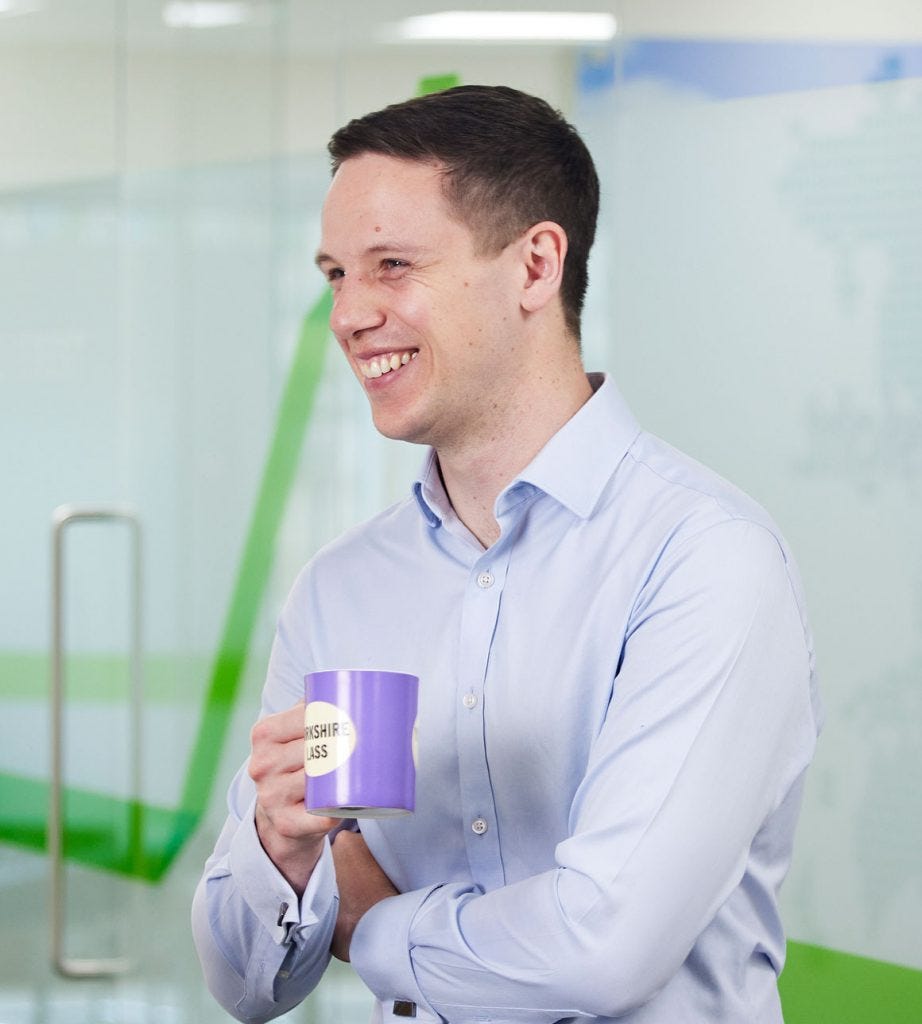
“It’s great to see Yorkshire’s e-pharmacy sector getting the recognition it deserves. Several of the UK’s first digital pharmacy and health tech businesses originated here, and CloudRx is very much part of that lineage. There’s a real depth of talent and infrastructure in the region that doesn’t always get the headline coverage, and deals like this show that some of the most compelling health tech businesses in the UK are being built right on our doorstep.”
::
The Rainmakers Summit on the 25th of March will feature a debate on the future of professional services as partners consider their next strategic options.
Featuring leaders of businesses who have chosen very different paths, and an investor in one of the consolidators driving the change across the sector, the debate will throw an intense focus on the stark choices that professional services firms face.

Making the case for independence will be Helen Clayton, managing partner at accountancy firm PM&M.
Telling the story about their respective lives on the public markets will be Rakesh Shaunak, CEO of MHA, and James Sheridan, head of M&A at Knights PLC.
Explaining the investment decision behind aggregation will be Matt Nicholson, investment lead at Tenzing, the private equity backer of accountancy consolidator DJH.
As a thank you for being part of our Rainmakers community, we are pleased to offer an exclusive 20% discount for the upcoming Rainmakers Summit on March 25th.
This is a unique opportunity to engage with industry leaders, gain insights, and connect with like-minded professionals.
As you can see the agenda features keynote speakers and exclusive sessions hearing from The Beauty Tech Group, Northern Gritstone, Rem3dy Health & GM Pension Fund. With some more details below…
Event details & registration:
https://www.rainmakerssummit.co.uk/
Discount code: RAINMAKER20
Please note that this offer is available for a limited time. We encourage you to secure your place at your earliest convenience.
::
Duncan Johnson, founder and chief executive of Northern Gritstone will also speak at the Rainmakers Summit.
The investment veteran, who started out in turnaround, has shaped Northern Gritstone to be a chunky life sciences and deeptech investment firm that’s now raised £362 million. The fund has close relationships with the research universities in the North, Leeds, Manchester, Sheffield and Liverpool.
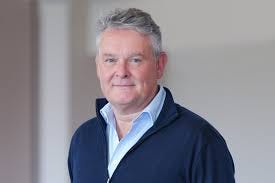
The chief executive of Northern Gritstone looks and sounds like a man having the time of his life in an interview with TheBusinessDesk.com last year, where he explained how he had completed a fresh £50 million raise from leading institutional investors including £35m from LGPS, the collective asset pool for Greater Manchester, Merseyside and West Yorkshire Pension Funds, alongside £15 million from new investors Fulcrum Asset Management and Aviva.
::
Thank you for subscribing to Rainmakers.
We believe in good journalism that is worthy of your support. Please share this edition of Rainmakers so we can grow the message further and wider.
The insights and commentary we share with you are rooted in the trust we have built in the business community.
We’re also on LinkedIn - please join our Rainmakers community group for updates and offers and opportunities to comment.
If you have something you think we should look at, then either reply to this newsletter or email michael.taylor@thebusinessdesk.com.