


Hello Rainmakers,
Investing in tech used to be relatively straightforward. Find a solid SaaS business, admire the recurring revenue, nod at retention and let the multiple do the work. That playbook has now been quietly shown the door.
There were sparkling insights like this heard all day at our Rainmakers Summit, but how does all this impact behaviours from now on?
Rainmakers subscribers get two unique pieces a week, but also full access to our back catalogue of investigations, scoops, and insights, including updates from fellow Rainmakers like this one, insights from The Secret Investor, interviews with entrepreneurs, and the leaders from VC and PE investors like Endless River Capital, Foresight, Mercia, Puma and WestBridge.
At our Rainmakers Summit, AI wasn’t just a talking point, it was the talking point. Two sessions focused on it, but it quickly took over conversations across the entire day. In dealmaking right now, if you’re not talking about AI, you’re probably being talked about.
As Tom Dunlop, CEO of Summize put it: “AI has disrupted our whole way of working,” which is hard to argue with.
Investing in tech used to be relatively straightforward. Find a solid SaaS business, admire the recurring revenue, nod at retention and let the multiple do the work. That playbook has now been quietly shown the door.
The question has shifted from: “Is this a good business?” to: “Will this still be a business in 18 months?”
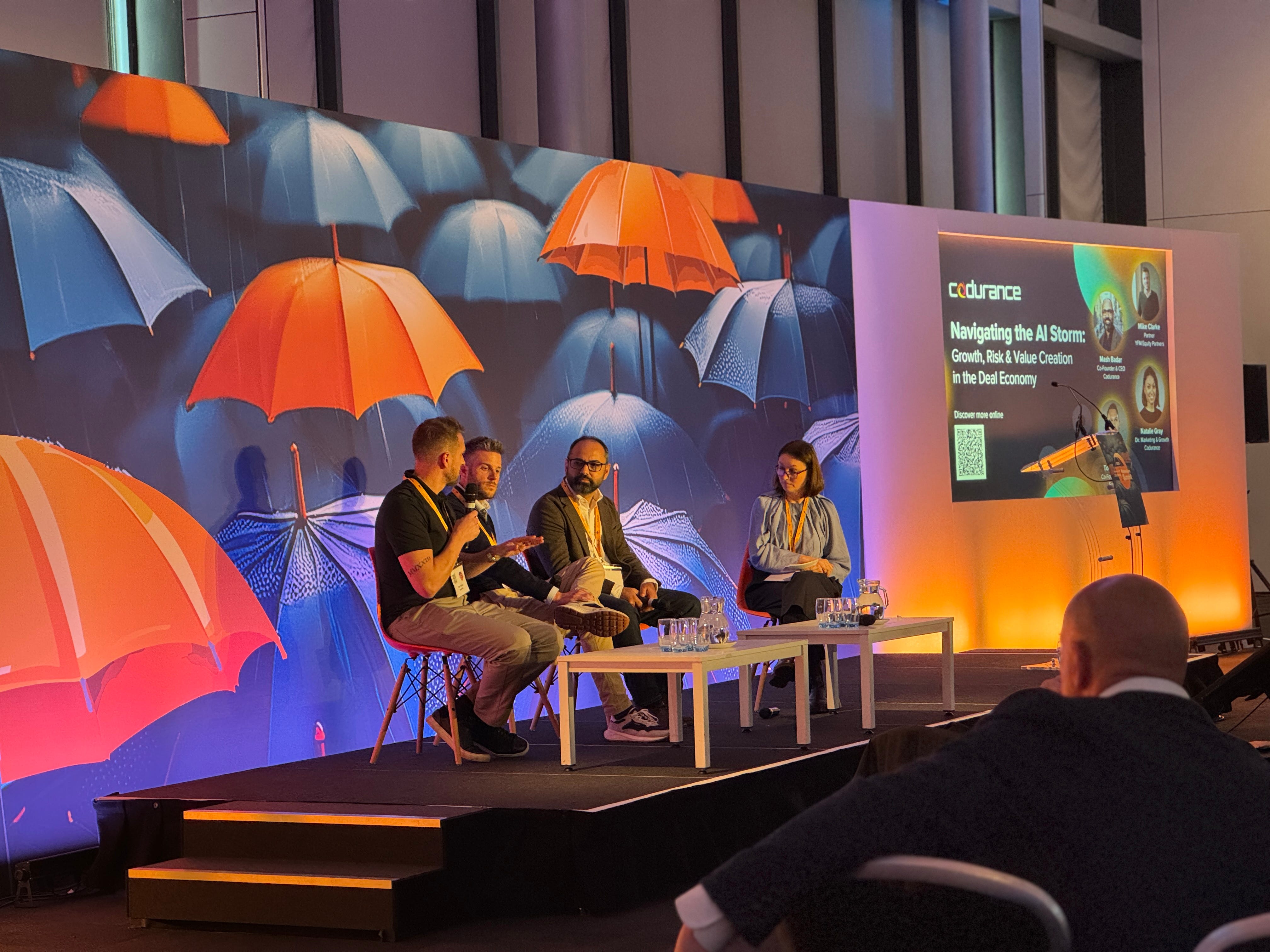
On one of the panels, Mash Badar, CEO of Codurance and Mike Clarke partner at YFM Equity Partners, explored how AI is reshaping the landscape, while Steve Lydford, managing director at Codurance outlined its impact across three areas: optimisation, automation and differentiation. It sounds simple, but the last point is doing the heavy lifting. Stay relevant or risk being replaced.
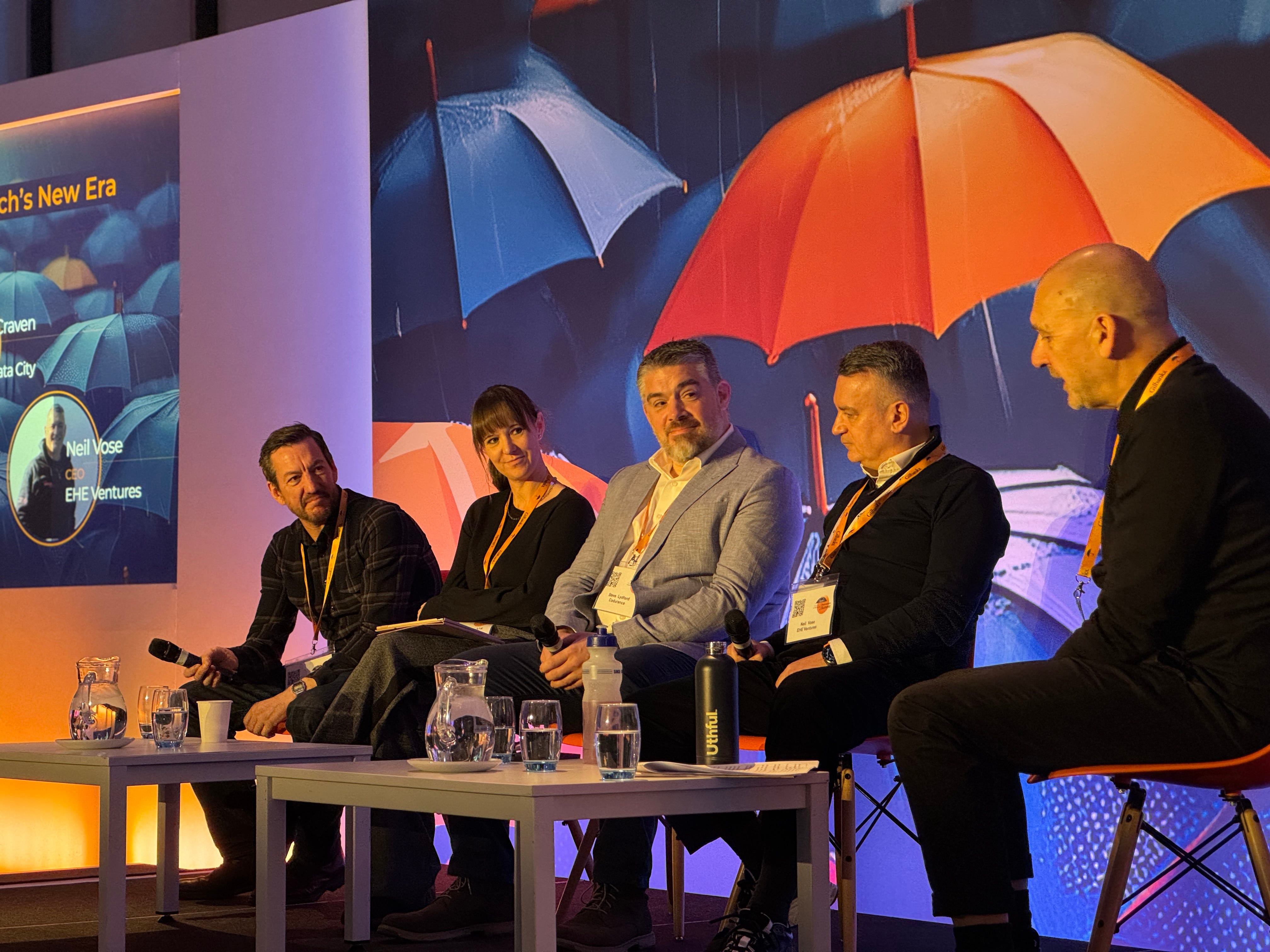
They agreed that: “SaaS is not disappearing, but it is no longer the default answer.” As Charlie Bartle, Co-founder of Zygens, noted, businesses are increasingly looking at AI-led tools first. Neil Vose, CEO of EHE Venture Studio, offered a more reassuring view, suggesting SaaS and AI are likely to complement each other.
Where things get real is in execution. Take Moneypenny. Under CEO Jesper With-Fogstrup, the business has introduced AI voice agents to support growth and expand into new markets. But it did not work perfectly at the start. The technology lacked context, made errors, and did not sound particularly human.
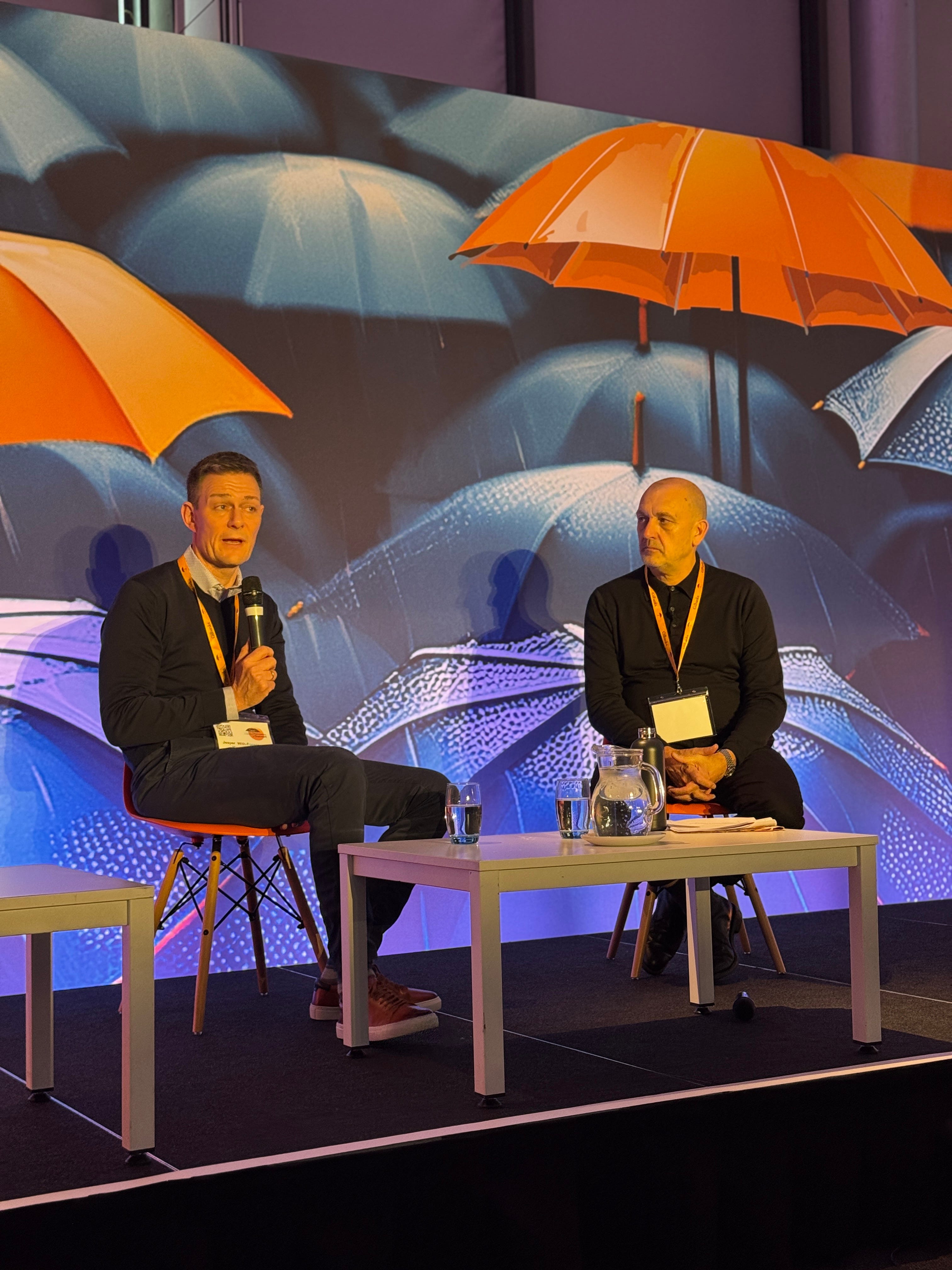
In other words, typical early-stage AI.
The turning point came from putting controls in place, tailoring the system to specific use cases, and combining it with human input rather than replacing people entirely. This hybrid approach, using AI where it works and people where it matters, is emerging as a more investable model.
AI is also forcing founders to make bigger strategic decisions. As Jesper highlighted, businesses now have to decide whether to build or buy capabilities, whether to go all-in on AI or layer it into existing products, and which parts of their operations could become obsolete. These are not small product tweaks, they reshape the whole business.
There is also less room for bluff. As Alex Craven, CEO of The Data City, pointed out, companies need to properly understand the technology they are using. Simply labelling something as AI-powered is no longer enough. Investors are asking tougher questions, and vague answers are easier to spot.
Outside London, regions like the North West are gaining momentum. Strong talent, lower costs and a willingness to take risks are creating the conditions for tech businesses to grow without relocating. The opportunity is clear, but it requires backing ideas earlier and accepting more uncertainty.
One of the more surprising takeaways is that caution may now be the most expensive strategy. While some businesses focus on cutting costs, others are investing in AI, improving efficiency and accelerating development. Standing still is not a neutral position, it is a gradual step backwards.
All of this leaves the investment case in a different place. AI is no longer a differentiator on its own, it is becoming a baseline expectation. SaaS still has a role, but increasingly as part of a broader AI-enabled model. Execution matters more than ever, particularly the ability to turn AI into something that works in practice. Speed, both in decision making and deployment, is also becoming more visible in valuations.
There is still a clear sense of optimism. The opportunity is there. The real question is: who is ready to move quickly enough to take advantage of it?

Thank you for subscribing to Rainmakers.
We believe in good journalism that is worthy of your support. Please share this edition of Rainmakers so we can grow the message further and wider.
The insights and commentary we share with you are rooted in the trust we have built in the business community.
We’re also on LinkedIn - please join our Rainmakers community group for updates and offers and opportunities to comment.
If you have something you think we should look at, then either reply to this newsletter or email michael.taylor@thebusinessdesk.com.