


Hello Rainmakers,
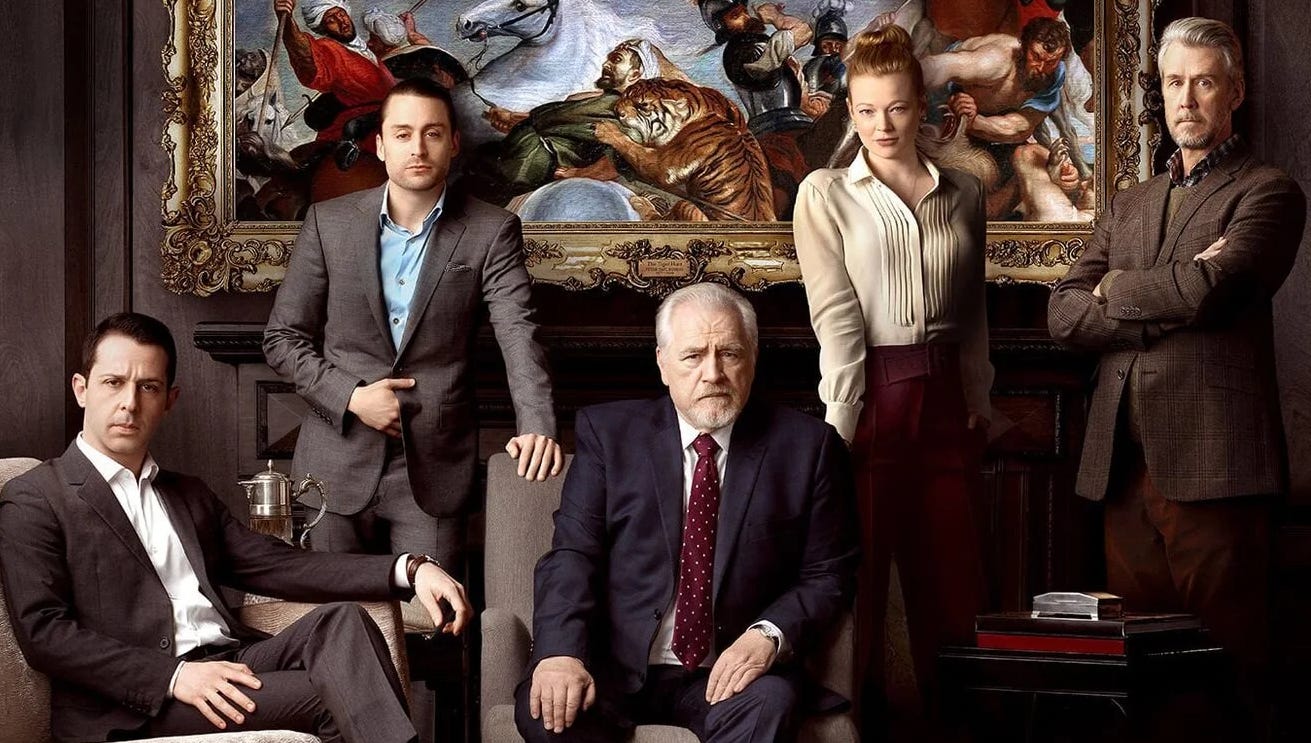
OK, so most succession battles aren’t as high stakes, rancourous and dramatic as the fictional Roy family saga as depicted in Succession, but Peter Walker, our Scotland editor has a few warnings.
Rainmakers subscribers get two unique pieces a week, but also full access to our back catalogue of investigations, scoops, and insights, including insights on key issues around doing deals, like this one. We also offer insights from The Secret Investor, interviews with entrepreneurs, and leaders from VC and PE investors like Endless, River Capital, Foresight, Mercia, Puma and WestBridge.
The UK’s 13.5 million baby boomers are currently driving an unprecedented transfer of wealth, but with so much of it tied up in the businesses they built, succession planning is becoming one of the most important issues for owners, staff, accountants and lawyers.
UBS’ recent Global Entrepreneur’s Report revealed that nearly a third (32%) of entrepreneurs are considering exiting their businesses within the next five years - rising to 57% among those aged 65 and over - with just under a quarter (23%) considering passing things on to the next generation.
Debjani Raffan, head of Scotland at UBS Global Wealth Management, explained that in the 20 years she’s been with the firm, this is the conversation that crops up the most with clients.
“People want to do right by their families and their employees, but talking about this is talking about death, so it can be difficult to get people to open up and engage,” said Raffan. “We see a lot of it, where the kids have a different career, but come back again and take over - the thing is, you must have a proper plan in place - wills, proper documentation, preferably a charter that stipulates what happens when someone passes away.

“There’s a huge level of responsibility on the likes of UBS to educate clients and their children,” she continued, explaining that real-world examples of the mess that unexpected death can create often help, while the wealth manager also tries to work with accountants and lawyers to build a “mini boardroom” around clients, setting up trusts or investment companies and understanding the tax perspectives.
“It’s interesting to see how different families work: some write detailed family charters, while others might have factions which don’t communicate,” added Raffan. “Often people find that nobody is there to take on the business - this happens quite a lot of the time - and it can be very bitter sweet.”
Ralph Riddiough, a director and head of corporate at Holmes Mackillop Solicitors, agreed that younger generations increasingly have no desire to follow in their parents’ footsteps and take on the family business.
“With no obvious successor, baby boomers often consider themselves too busy running their business and don’t give the issue much thought until they want to retire,” he said. “A prime example of this can be seen in the pharmacy industry in Scotland - 30 years ago, a large proportion of Scottish pharmacies were founded and run by baby boomers, but many of these are now being bought by private equity and larger conglomerates looking for companies where retirement looms - the outcome is a real consolidation of the market.”

Riddiough said his firm regularly deals with retirement exits from pharmacies, dentists, opticians, manufacturing and engineering firms, helping to ensure smooth handovers to buyers.
“Sellers and long-serving staff members know the business inside out, but this wealth of knowledge has to be documented,” he explained. “A crucial part of a successful transition is the creation of a contract that legally protects the seller - in the haste to get a business off your hands, it’s easy to be railroaded and omit terms which protect any warranty and indemnity claims after the sale.”

Seemingly every deal announcement touts the synergies in corporate culture and values, but when a long-term owner is passing the baton, this kind of legacy planning and concern for staff often genuinely trumps price.
“Employee share incentive plans, where employees gradually become the owners are becoming increasingly popular, partly because the seller knows the staff,” noted Riddiough. “There are also tax benefits involved.”
Rupert Murdoch’s recent failed attempt to give his eldest son control of his media empire brought into focus question of succession. The court case saw the 93 year-old media mogul reportedly blocked in his bid to change his family trust, which gave his four eldest children equal voting power after his death. A court commissioner ruled that Rupert and his son Lachlan had acted in ‘bad faith’ and called their efforts a ‘carefully crafted charade’ designed to ‘permanently cement’ Lachlan’s control.
The case reportedly began when the Murdoch children watched an episode of drama series Succession, which sees the patriarch - played by Scottish actor Brian Cox - leave the family and business in chaos after his death.
