


Hello Rainmakers,
There’s no doubting what the biggest story has been in your world this week, the sale of Clearwater UK to US investment bank Key.
Here’s the reaction from two of the principals in the business, Mark Taylor and Michael Loudon, who we spoke to exclusively as the ink was drying on the game-changing deal.
Rainmakers subscribers get two unique pieces a week, but also full access to our back catalogue of investigations, scoops, and insights, including updates from fellow Rainmakers like this one, insights from The Secret Investor, interviews with entrepreneurs, and the leaders from VC and PE investors like Endless, River Capital, Foresight, Mercia, Puma and WestBridge.

As you’d expect, the sale of Clearwater’s UK partnership to the American investment bank Key is a textbook example of how a sale process for a business at the top of its game works.
On the face of it all the building blocks are in place, the founders ready to crystallise, so are willing sellers; there’s a ten year trusted relationship that has grown closer; an active next generation management team; a strong brand; a good operating structure; and a strong arrangement of partnerships with European boutique practices.
As CEO Mark Taylor describes it, Clearwater is “a relationship business in a transactional world”, and observes first of all, that the deal feels more like an investment than an acquisition.
Clearwater has spent 23 years building to this moment. What started as a regional mid‑market adviser in Manchester, Nottingham and Birmingham, it has evolved into a multi‑office, sector‑driven firm with London clout and a debt advisory arm that smooths revenue volatility. Along the way, the leadership has made a series of timed bets – sector specialisation in 2008–09, building debt advisory, and then a deliberate push into international – that have largely paid off.
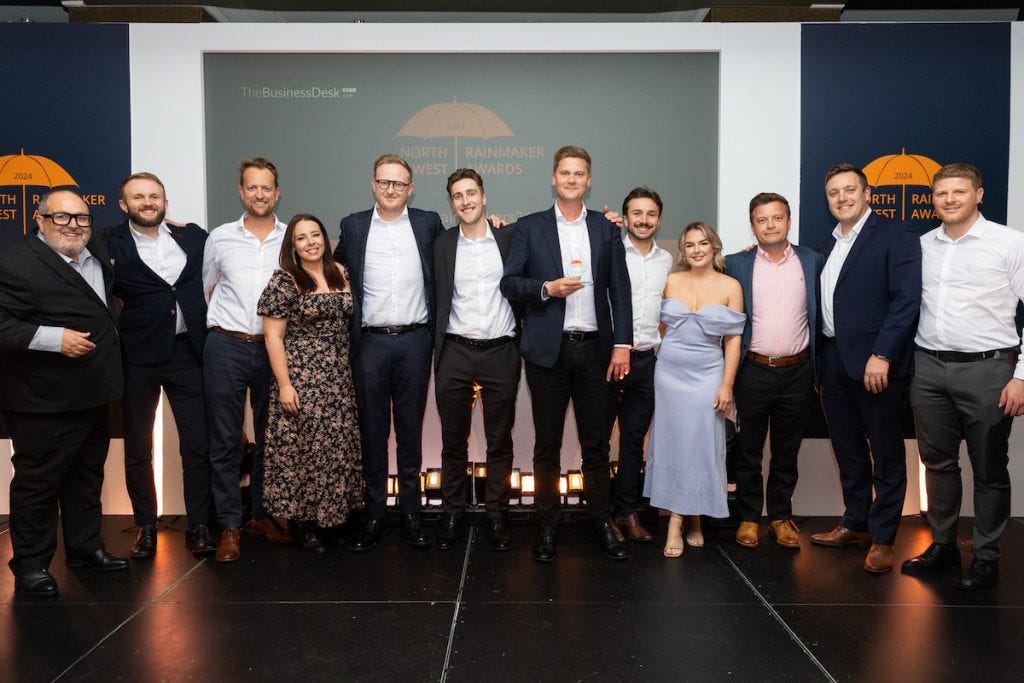
It’s also been enjoying a recent purple patch. Sweeping the board at the regional rainmaker Awards on the back of revenue of around £50m in its 2024-25 financial year, and its advice on 74 transactions with a combined value of over £6bn, comprising 41 M&A deals and 33 within its debt advisory practice.
Key’s acquisition of the UK partnership is best understood as the culmination of the last of those bets: a decade‑long courtship with the US bank that began not with a sell‑side teaser, but with relationship-building and a clear strategic gap on both sides.
A decade in the making
Taylor insists that the critical fact about this deal is that it is not a sudden pivot to America, but the extension of a 10‑year relationship with KeyBank. Founder‑chairman Michael Reeves (“Reevesy” internally) and his team spent years in the US searching for a partner with the right cultural and strategic fit. That process ultimately led to what he calls “an exclusive transatlantic collaboration” that formalised in 2020, with Clearwater and Key working together on mandates, sharing sector teams and cross‑fertilising deal flow.
Michael Loudon (currently on his last victory lap as Rainmaker of the Year for 2025), puts it like this - this was never about bolting a UK asset onto a US platform overnight. He says the two sides already understood how each other worked, what sort of clients they served and, crucially, how decisions got made. He says Key has been looking for a European foothold to help grow its corporate finance revenues from the high hundreds of millions to the billion‑dollar mark, Clearwater was the obvious platform.
“They’ve got a very similar people‑based, relationship‑based, values‑based culture, and that’s why it works so well with us, because…the culture is almost our secret sauce at Clearwater,” Loudon says.
From Clearwater’s side, the choice was whether to carry on with a highly productive collaboration or crystallise that into deeper capital backing – without losing control of the model that made the firm attractive in the first place.
Investment, not takeover
Taylor is explicit that, while this was reported to the opening of the New York stock exchange yesterday (22 April) as an acquisition, the lived reality feels different. He stresses that the existing UK board and management structure remains intact, that Key will not be taking board seats, and that growth strategy – organic and inorganic – will continue to be devised and driven from the UK.

Further, he says there are no partner exits baked into this deal. Instead, partners receive bespoke packages reflecting past performance and future contribution, and all are committed to staying. That is not the language or structure of a “sell and sail off” transaction; it looks more like private‑equity‑style backing for management, just delivered by a listed US regional bank.
“They are a regional bank at their heart, at their core…they were formed in Albany, their head office is in Cleveland, they understand the value of regional coverage,” he says.
However, in time, the business will rebrand as Key.
From the other side of the Atlantic, this is a bank with a market cap north of $20bn and roots in Albany and Cleveland rather than Wall Street, it has an explicit ambition to scale its investment banking and corporate finance arm. Clearwater gives it a proven, profitable, regionally rooted UK platform that already knows how to serve entrepreneurs and mid‑market corporates – a segment where US buyers are increasingly dominant on the buy‑side.
Culture as the ‘secret sauce’
Both Taylor and Loudon come back repeatedly to culture. Clearwater’s self‑image is of a “relationship business in a transactional world” – a firm that has deliberately built a matrix of regional coverage and sector depth, and then guarded it. They are acutely aware that a mis‑step on ownership could corrode that balance.
That is why the decade‑long prelude matters. By the time the acquisition talks got serious, both sides had already tested each other’s tolerance for autonomy and approach to clients. Loudon talks about culture as Clearwater’s “secret sauce”, and the leadership has been clear that any deal had to protect that as much as the P&L.
Key, for its part, is not dropping a Wall Street operating manual on the table. It is effectively backing the existing Clearwater model: regional boots on the ground, strong mid‑market relationships, and sector teams that can talk credibly to strategic and financial buyers, particularly in North America.
Brand, rebrand – but not yet
One of the more telling aspects of the structure is the approach to branding. There will be no overnight Key logo slapped across the UK offices. The Clearwater name will go, but not immediately, which is a shame, because it’s quite a cool brand with real equity in the British mid‑market.
Taylor insists the rebrand will be positioned as a gradual evolution rather than a big‑bang event.
Doubling down on the regions
For anyone tempted to see this as a US bank buying a City foothold – Taylor and Loudon are keen to stress the opposite. Key’s own heritage is regional, and Clearwater’s model is built on strong local offices in Manchester, Birmingham, Leeds and beyond, with London providing sector firepower rather than dictating strategy.
There are no office closures as a result of the transaction. On the contrary, Taylor insists that Clearwater is actively looking for a new office in Leeds and larger space in Manchester, where supply is currently tight. The deal is being used as a platform to invest further in regional presence and sector teams, not to rationalise them away.
In a market where several UK mid‑market boutiques have ended up absorbed into global platforms with inevitable centralisation, this won’t go that way, they say.
Reevesy’s long game
Behind all of this sits Michael Reeves, the co-founder with Phil Burns, and current chairman, who has quietly spent years fending off approaches, or if you are being slightly unkind, unsuccessfully identifying a buyer. Clearwater has been an obvious target for international banks and larger independents for some time – profitable, differentiated and with a clear brand in the UK mid‑market.

What marks this deal out is not just that Reeves finally said yes, but when and to whom. The acceptance comes after Key has been tested over ten years of collaboration, and at a point where the firm has a clear next‑generation leadership team in place: Taylor as CEO, Loudon and others stepping into expanded roles, and a board structure that can absorb growth without importing external decision‑makers.
In other words, this is not a founder cashing out at the top of the cycle. It looks more like Reeves completing the final piece of a longer‑term succession plan: securing capital, international access and a long‑term partner, while locking in the people who will run the business for the next decade.
The issues to look out for are what has happened to Houlihan Lokey, which started out as a strong regional advisor to listed businesses and is now the highly successful Manchester office of a global investment bank doing tech deals, moving away from its roots.
Their competitors who spoke to Rainmakers are pleased for Reeves, who commands universal respect around the sector.
But many express the view too that they’ll move up the food chain and seek bigger fees from mega deals, and straying from their regional roots.
Others say that it’s a neat solution for all concerned, but wonder about the longer term incentives for the next generation within the business.
Either way, with the Big Four seemingly vacating the space, other American firms like A&M and Houlihan Lokey flexing their muscle, and turnaround firms like Interpath and FRP upping their advisory game, the plates are definitely shifting.
::
The North West, Yorkshire and West Midlands Rainmaker Awards are upon us, once again bringing together the region’s deals community to celebrate the standout deals, teams, and individuals of the past 12 months.
Voted for by the corporate finance community itself, the awards are decided on a one-firm, one-vote basis – making the Rainmaker a genuine peer-led recognition.
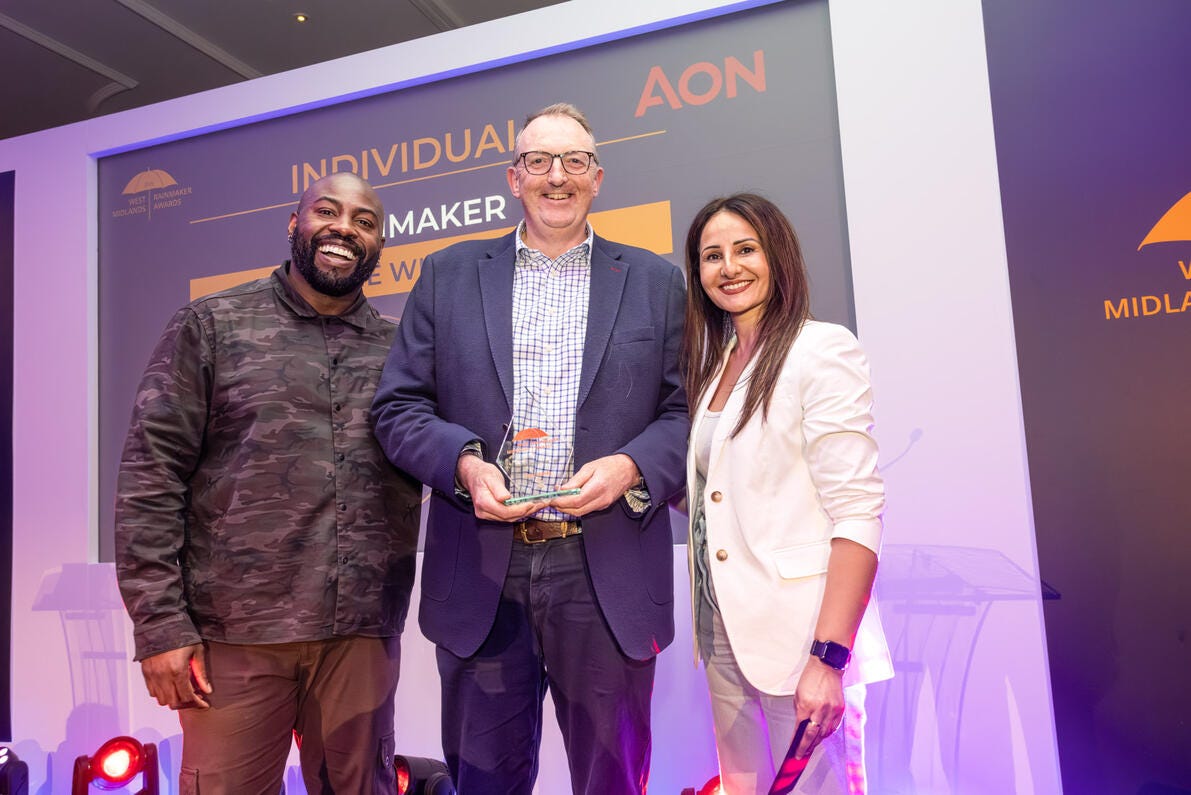
The Rainmaker Awards ditch black-tie formality and speeches in favour of a relaxed evening focused on what the deals and the people who made them happen.
The evening is also a great way to connect with leading firms and individuals shaping the regional deal landscape.
There is a new individual category this year, as we will recognise Lifetime Achievement of one of our Rainmakers for the first time.
The 2026 Yorkshire awards are on June the 11th at New Dock Hall in Leeds, the North West awards will take place on the 25th of June 2026 at the Kimpton Hotel in Manchester city centre, and the West Midlands at the Burlington Hotel in Birmingham on the 2nd of July.
Last year sold out, so book early to secure your table.
::

::
Thank you for subscribing to Rainmakers.
We believe in good journalism that is worthy of your support. Please share this edition of Rainmakers so we can grow the message further and wider.
The insights and commentary we share with you are rooted in the trust we have built in the business community.
We’re also on LinkedIn - please join our Rainmakers community group for updates and offers and opportunities to comment.
If you have something you think we should look at, then either reply to this newsletter or email michael.taylor@thebusinessdesk.com.
Rainmakers is a reader-supported publication. To receive new posts and support our work, consider becoming a free or paid subscriber.