



Hello Rainmakers,
As AI reshapes professional services and skills shortages persist, KPMG’s Kal Nijjar believes the sector’s biggest responsibility may lie outside the deal process.
Rainmakers subscribers get two unique pieces a week, but also full access to our back catalogue of investigations, scoops, and insights, including updates on sector trends, like this one, insights from The Secret Investor, interviews with entrepreneurs, and the leaders from other VC and PE investors like Endless, BGF and WestBridge.
The corporate finance sector spends much of its time helping businesses navigate growth, investment, acquisitions and transformation. Yet as firms look ahead to the next decade, one challenge sits beyond dealmaking and financial performance: ensuring the next generation has the skills, confidence and opportunities needed to thrive in the economy those deals help create.
For Kal Nijjar, Nottingham Office Managing Partner at KPMG, that responsibility extends well beyond client work.
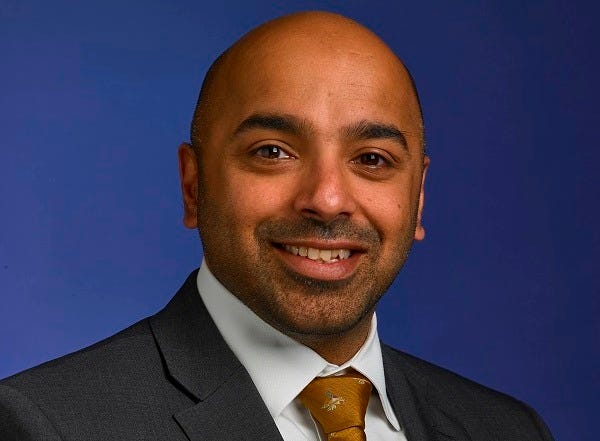
His leadership agenda is built around what he describes as the “three Cs” of clients, colleagues and communities. While the first two are familiar priorities for any professional services firm, it is the third that he believes deserves greater attention across the advisory sector.
“KPMG has been part of the East Midlands business community since the 1930s,” he says. “There is a real sense of community here, but also a real ambition for the future.”
At a time when businesses face persistent skills shortages, technological disruption and economic uncertainty, Nijjar believes professional services firms have a wider role to play in supporting the communities from which future talent, entrepreneurs and business leaders will emerge.
One of the biggest challenges he identifies sits within the profession itself. He points to those who joined organisations during the pandemic and spent the formative years of their careers working remotely.
“That’s the population where I think, if anything, that skill set has been lost,” he says. “They were effectively told: ‘Welcome, come on in. By the way, you can’t go to the office, and you’re learning to work remotely.’ That’s where the work is needed to really drive and develop those relationship skills.”
For advisers whose careers are built on trust, relationships and judgement, those skills matter.
While firms continue to invest heavily in technology, AI and digital transformation, Nijjar argues that human capital remains the profession’s most valuable asset. Technical expertise can be taught. Relationship building, commercial judgement and leadership are often developed through exposure, mentoring and experience.
That is why he believes firms need to become more active participants in their local communities.
Having previously led corporate responsibility initiatives within KPMG, Nijjar wants to deepen engagement with schools, local organisations and young people who may never have considered a career in professional services.
“How can we spark a bit of life and plant a seed around: ‘You can really do this sort of stuff’?” he asks.
::

::
For corporate finance professionals, he sees this as far more than a corporate responsibility exercise. It is an investment in the future workforce and business ecosystem on which the sector depends.
Across the UK, many talented young people still have limited exposure to careers in accountancy, corporate finance, banking, law and advisory services. For those without professional networks, such industries can often feel inaccessible.
Nijjar believes firms should work together to change that.
“Why wouldn’t we then just link up with one of the law firms here or one of the banks here and get them to do a talk about their route as well?” he says. “All the legwork’s done and the kids are in. You’ve got a captive audience.”
The approach is practical rather than philanthropic. Stronger communities create stronger talent pipelines. Better access to opportunity ultimately benefits employers as much as individuals.
The argument is particularly relevant in regions such as the East Midlands, where economic growth increasingly depends on sectors including advanced manufacturing, logistics, technology and data-driven businesses.
While the region has faced many of the same pressures as the wider UK economy, Nijjar believes its long-term fundamentals remain strong.
“The East Midlands has faced many of the same pressures as the rest of the UK, inflation, cost pressures and weaker business confidence, but it also has some very strong structural advantages,” he says.
“It’s a highly diverse economy with strengths in advanced manufacturing, logistics, retail, transport and increasingly technology-led businesses.”
Technology will inevitably shape that future.
Businesses across every sector are evaluating how artificial intelligence can improve productivity, automate processes and enhance decision making. Corporate finance is no exception.
“It would be foolish to say it’s not going to impact us going forward,” Nijjar says. “AI is going to change how we work. I’m just not quite sure what those changes are right now.”
What he is certain about is the continued importance of human skills.
As AI takes on more routine analytical work, relationship management, communication and strategic thinking are likely to become even more valuable differentiators for advisers.
That shift makes investment in talent development and community engagement more important, not less.
The corporate finance sector has always played a central role in supporting growing businesses. Increasingly, Nijjar suggests, it may need to think about growth in broader terms. Not only helping companies scale, but helping create the conditions that allow future entrepreneurs, employees and leaders to succeed.
“We need to think through what we believe the world will look like, what skills we’re going to need, and what we’re going to put in place to develop the youth of today to be ready for it,” he says.
For a sector focused on long-term value creation, it may prove to be one of the most important investments it can make.
::
The 2026 Rainmaker Awards
The North West, Yorkshire and West Midlands Rainmaker Awards are upon us, once again bringing together the region’s deals community to celebrate the standout deals, teams, and individuals of the past 12 months.
Voted for by the corporate finance community itself, the awards are decided on a one-firm, one-vote basis – making the Rainmaker a genuine peer-led recognition.
Voting forms have landed, after the shortlists have been agreed by a judging day involving all the region’s leading firms.
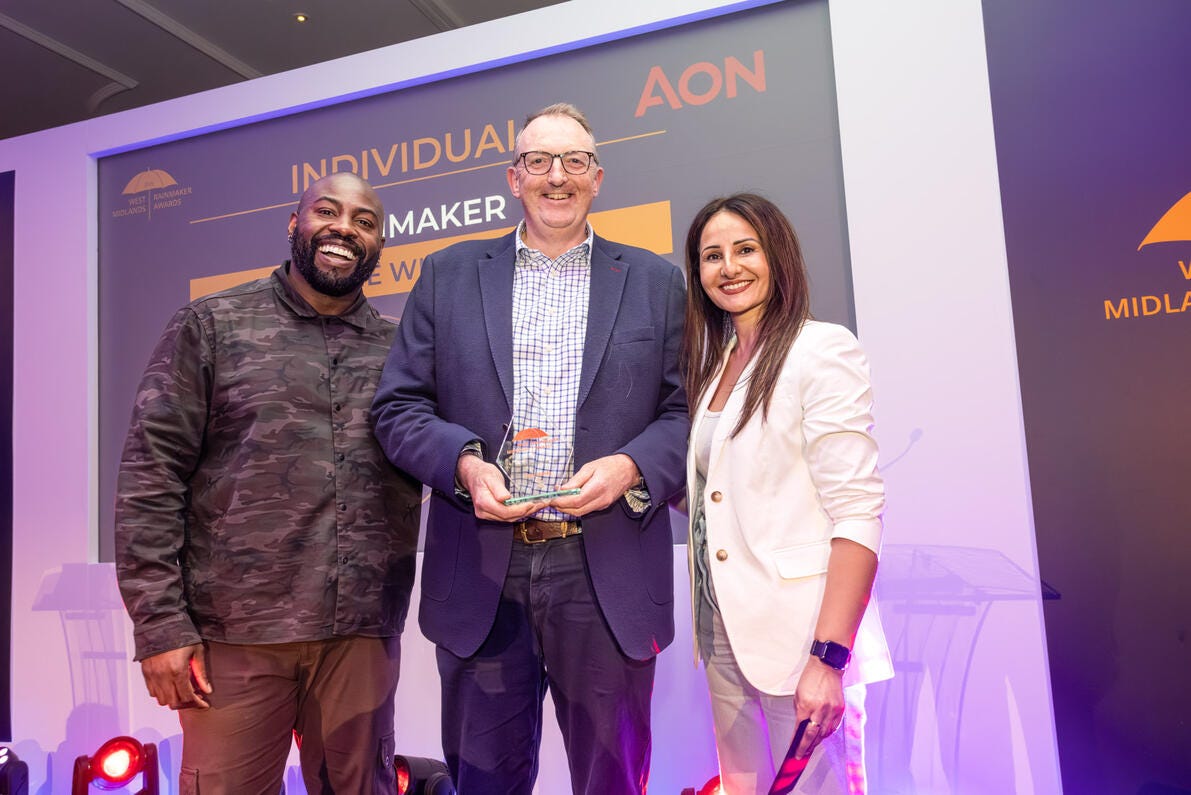
The Rainmaker Awards ditch black-tie formality and speeches in favour of a relaxed evening focused on what the deals and the people who made them happen.
The evening is also a great way to connect with leading firms and individuals shaping the regional deal landscape.
There is a new individual category this year, as we will recognise Lifetime Achievement of one of our Rainmakers for the first time.
The 2026 Yorkshire awards are on June the 11th at New Dock Hall in Leeds, the North West awards will take place on the 25th of June 2026 at the Kimpton Hotel in Manchester city centre, and the West Midlands at the Burlington Hotel in Birmingham on the 2nd of July.
We have also now announced dates and an opening for entries for the East Midlands event on the 5th of November in Nottingham and the South West event on the 26th of November in Bristol.
Last years events sold out, so book early to secure your table.
::
::
Thank you for subscribing to Rainmakers.
We believe in good journalism that is worthy of your support. Please share this edition of Rainmakers so we can grow the message further and wider.
The insights and commentary we share with you are rooted in the trust we have built in the business community.
We’re also on LinkedIn - please join our Rainmakers community group for updates and offers and opportunities to comment.
If you have something you think we should look at, then either reply to this newsletter or email michael.taylor@thebusinessdesk.com.
Rainmakers is a reader-supported publication. To receive new posts and support our work, consider becoming a free or paid subscriber.