


Hello Rainmakers,
Fresh from being crowned TheBusinessDesk.com’s Rainmaker of the Year, Jonny Sharp tells Sheryl Moore how his tech-focused firm is shaping up to go global.
Rainmakers subscribers get two unique pieces a week, but also full access to our back catalogue of investigations, scoops, and insights, and profiles like this one, insights from The Secret Investor, Endless, BGF and WestBridge.
It’s a bold ambition for a boutique corporate finance firm which only began life two years ago. But Jonny Sharp is already looking to plant the Cerelo flag on the US West Coast within the next five years.
“We get asked a lot about our capacity for raising capital and selling to West Coast buyers,” he says. “So, it’s something we’re actively exploring.”
Ambitious? Certainly. Far-fetched? Not really. Since launching Cerelo in 2024, Sharp and co-founder Mick Morris have completed around 10 transactions, expanded the team and built a reputation as go-to advisers for software, technology and media businesses. And last week Jonny, who is still a few years short of his fortieth birthday, bagged the coveted accolade of Rainmaker of the Year.
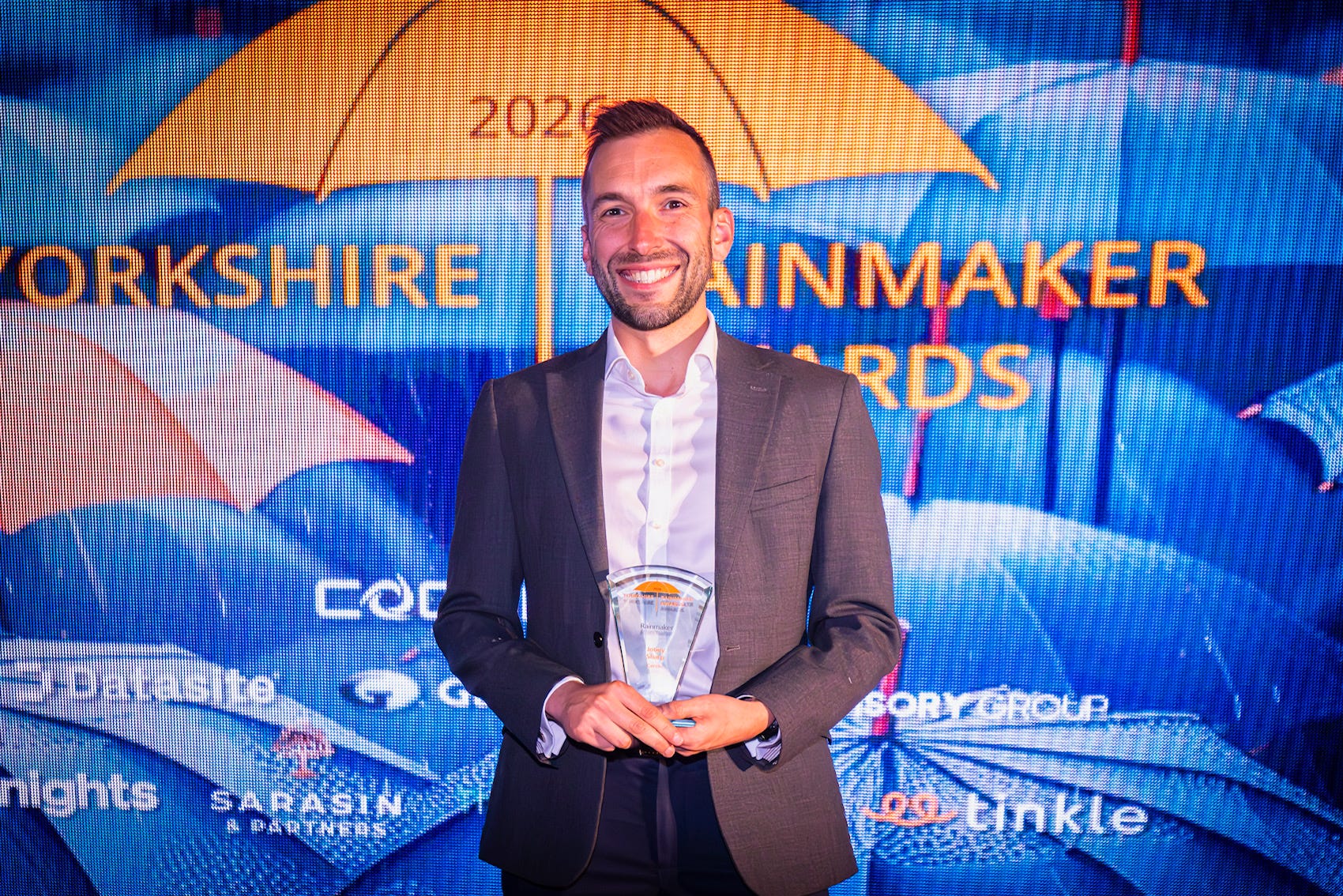
For Sharp, the award feels less like a destination but more of a milestone on a much longer journey.
“The really nice thing about this award is it’s voted for by your peer group,” he says. “To be recognised by that group of dealmakers in this community is amazing. Very humbling, very proud and just thrilled to pick it up and represent the team.”
That team has built a business around a simple proposition: sector expertise matters.
Sharp’s career has taken him through some of the industry’s biggest names. He started out at Deloitte, then moved to Zeus Capital working under the stewardship of founder, Richard Hughes.
A spell with venture investor Mercia followed before he returned to Deloitte where he eventually led the firm’s technology and media M&A team across the North.
Each stop taught him something different. Zeus showed him the energy and ambition of a fast-growing boutique.
“I started out at Zeus pretty fresh-faced in corporate finance, working closely with Richard,” he says. “He grew that business from about 20 people to 100. I probably wouldn’t be here without that experience.”
Deloitte brought structure and scale. “Working with very small teams on very large projects shows you what you’re capable of,” he says. “Then, working for the largest professional services organisation in the world gives you another lens and another level of challenge.”
While Mercia provided an investor’s perspective. “I wanted to do some investing, backing early-stage technology businesses. It was super interesting and gave me a different view of what makes companies attractive to investors.”
Looking back, all three experiences pointed towards the same conclusion. “What I was seeing in the market was a very strong move towards clients wanting advice from people who have genuine knowledge of their sectors,” he says.
“Founders want someone who truly understands a software business or a technology company and can quickly articulate who is likely to buy it, who is likely to invest and why.”
That conviction became the foundation for Cerelo. In an industry where almost every advisory firm claims to have a ‘tech sector specialism’ Sharp and Morris decided to go all in and focus exclusively on technology and media.

“I felt there was a massive opportunity to provide the same quality advice that clients would expect from the global players, but with complete focus on those sectors.”
So far, the market appears to agree. The Cerelo team has had an extremely successful two years. And, in an era where consolidation in professional services is rife and boutique firms like Cerelo are being snapped up, Sharp admits that Cerelo ‘is on the radar’ but for now the plan is to remain fiercely independent.
Corporate finance advisers spend years telling entrepreneurs how to grow businesses. Fewer take the leap themselves. Yet Sharp and Morris did exactly that, launching Cerelo with financial backing from two former clients who believed strongly enough in the pair to invest in the business.
“They liked working with us in a previous life and were in to what we were trying to build,” he says.
The experience also gave Sharp a fresh appreciation for the challenges founders face every day. “We’ve been there and raised angel investment ourselves. It’s not easy, even when people know you.”
Two years on, the business has largely delivered against plan. That doesn’t mean life has been easy.
“It’s been an absolute roller coaster,” he says. “We’ve hit our plan, which I’m delighted about, but what I’ve learned is the stress levels don’t necessarily go down. You just get different problems.”
He laughs before offering a line many founders will recognize: “My day job is mergers and acquisitions. My night job is growing a business.”
The challenge, he says, is balancing client delivery with business building.
“We are the business. We’re the product people are buying. It’s difficult to step back and work on the business when you’re still at the coalface.”
The irony isn’t lost on him. After years advising entrepreneurs how to scale, he’s now having to take some of his own advice.
For a boutique that only opened its doors in 2024, Cerelo has made an impressive start. Its first transaction involved Yorkshire software platform The Build Chain, where the firm helped secure investment from a combination of venture and strategic investors.
Since then, deal flow has accelerated. The business has completed around 10 transactions, expanded beyond Yorkshire and built a client base stretching across London, Birmingham and Manchester.
“Ten deals in two years is not bad going, however our journey is all about sustainable growth. Do some deals, build the team, do some more deals. Keep quality high and make sure clients refer you on.”
The formula has allowed the firm to grow steadily without losing the specialist focus that underpins the model.
Around two-thirds of Cerelo’s work involves sell-side mandates and fundraising. The remainder comes from larger corporates, private equity investors and acquisitive businesses looking for opportunities in software and media.
That specialist positioning increasingly works both ways.
“We get asked to work for buyers because they know we know our segments so well,” he says. We can give strong views on software and media because we’re doing deals in those sectors all the time.”
The firm’s reputation has also allowed it to be selective. In a market where many advisers are under pressure to win mandates, Sharp says Cerelo is comfortable saying no.
“Our first question when somebody says they want to sell their business is: why? And are you sure you want to do it now?”
It’s a tougher question than some clients expect.
“It’s been a challenging economic environment, and buyers will ask the same thing. We only want to take on clients where there’s a genuine reason for doing a deal and a strong story to tell.”
That approach may explain why peers chose him as Rainmaker of the Year. In Sharp’s world, rainmaking isn’t simply about volume. It’s about matching the right business with the right opportunity at the right time.
For all his national and possible international ambitions, Sharp remains deeply optimistic about Yorkshire’s technology economy.
He believes the region is quietly producing a new generation of founders, particularly in software, AI and digital businesses.
“There have been some amazing success stories over the last five years,” he says. “What’s exciting is what happens afterwards. When people have successful exits, they’re empowered to go and build businesses themselves.”

That cycle is becoming increasingly visible across the region. Sharp sees former executives, founders and senior leaders launching ventures fuelled by experience gained in larger businesses.
